3 Things to Consider When Choosing Cabinet Colours
When designing a new kitchen, or planning any home renovation, choosing colours is often one of the most exciting parts of the process. But with almost endless options of paints and stains, selecting finishes can also feel overwhelming.
Our designers are always around to help you plan your new kitchen and think of functional details, but we also help guide you through finish selections, so you can feel confident you’ve made the right choice before purchasing your new cabinets! Here are three things we recommend taking into consideration for your selections…
1. Lighting
Lighting plays a huge role in how colours appear in your home. The number of windows you have, the direction they face, and even the time of year can all influence how your cabinetry looks throughout the day. Direct sunlight can make colours appear warmer and bring out golden tones in wood stains. While indirect natural light can emphasize cooler undertones and make some colours appear more neutral/grey.
For example, the photo below shows the same cabinet door sample photographed in four different locations in and around our showroom. Even within the same space, lighting can make a noticeable difference!

When our clients are selecting colours, we encourage homeowners to take samples home and view them in different lighting conditions: in the morning, around midday, and in the evening. This helps you see how natural light affects each finish in your own space.
It’s also important to consider your artificial lighting, both when paired with natural light and when it’s the only light source in the evening. Light bulbs are available at different temperatures and can significantly influence how your cabinet colours appear. Warmer lighting can enhance yellow and golden tones, while cooler lighting may emphasize blue or grey undertones.

2. Undertones
Undertones play an important role in creating a cohesive look throughout your home. While lighting can emphasize certain undertones, every paint colour and wood stain has underlying tones that can either complement one another or clash.
When choosing cabinet finishes, whether painted or stained wood, it’s important to view your samples alongside your countertops, flooring, hardware, tile, and wall colours. Some undertones are easy to identify, while others are more subtle. Looking at all your selections together helps you see how they interact and whether any colours appear different when paired with one another.

A great example of this comes into play when choosing a white paint. It can be daunting since there are so many options available, so when I have a client wanting white cabinets, I usually send them with three samples:
Distant grey, Chantilly Lace and Dove Wing – three of my favourite white paints for cabinets, that vary from a cool bright white, to creamy off-white. The final selection may not be chosen from the three options, but it is a great starting point to see what tones may suit your home best.
The surrounding environment can also influence how undertones appear. Here in Manitoba, we experience significant seasonal changes, which can affect the way colours look inside our homes.
For example, if you have large windows overlooking a vibrant, green lawn in the summer, reflected light from outside can make green undertones more noticeable throughout your space. In winter, when the trees and ground are covered in snow and the skies are overcast, the cooler natural light can make certain finishes appear bluer.
While you can’t always predict exactly how a finish will look in every season, understanding these influences can help you make a more informed decision. This is another reason we recommend viewing all your samples together and in your own space before committing to your final selections.

3. Consider the Base Material
When selecting finishes, particularly wood stains, it’s essential to consider the underlying material. The same stain can look remarkably different depending on the wood species it’s applied to, largely because each species has its own natural colour and undertones.
For example, alder can give a stain a warmer, more red/orange appearance, while white rift oak may create a cooler, greyer look with subtle green undertones. Even when using the exact same stain, the final result can vary significantly between wood species.

Variation also occurs within the same species. Because wood is a natural material, every piece has its own unique grain patterns, colours, and characteristics. The appearance can vary depending on the individual board or veneer selected.
Walnut, for example, is known for its natural variation. One piece may look quite different from another, and a single piece can feature a range of tones, including lighter blonde streaks and darker areas, as well as knots and other natural characteristics.
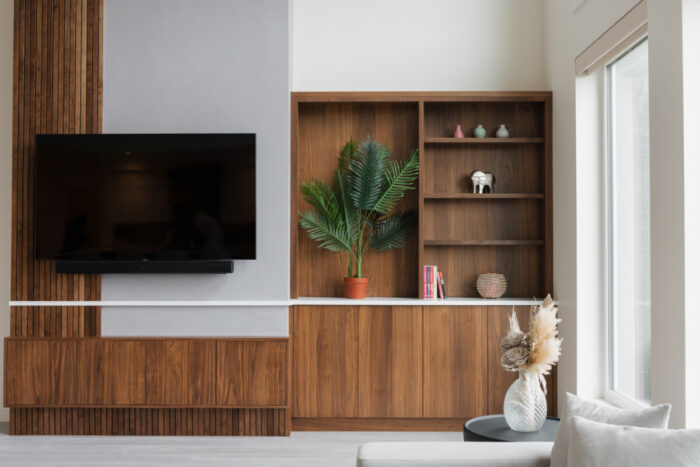
This variation isn’t limited to wood. Natural stone will always have differences from one slab to another, but manufactured products can vary slightly, too. Paints, stains, and other finishes may have subtle differences between batches or dye lots, but they’re not typically as significant as real wood.
Understanding the characteristics of your chosen material helps set realistic expectations for the finished product and ensures you know what to look for when reviewing samples.
Feel Confident in Your Finish Selections
Cabinetry is often one of the largest investments in kitchen renovation, and we want you to feel confident that you’ve chosen the right finishes for your space. By considering lighting, undertones, and the base material, you can better understand how your selections will look together and make informed decisions.
Our kitchen designers are here to guide you through the process, answer your questions, and help you understand the details that can make all the difference. With the right guidance and careful consideration, choosing your kitchen finishes can be an exciting part of creating a space you’ll love for years to come.

Brooklyn Stein
Brooklyn joined the Two30Nine team after earning a bachelor’s degree in Environmental Design with a focus on interior design at the University of Manitoba. She loves to connect with her clients to create beautiful, functional spaces that they will love.