Beyond the Showroom: What a Factory Tour Taught Me About Design
Until this visit, custom cabinetry existed mostly as drawings, renderings, and finish samples in my mind.
I’m Leanne, an Interior Decorating student nearing the end of my program at Red River College Polytechnic and currently completing my field placement at Two30Nine by Decor.
Throughout my placement, I’ve spent time learning alongside the designers in the showroom, sitting in on meetings with homeowners and design-build professionals, and accompanying the team on site visits to clients’ homes. Seeing projects develop from understanding clients’ needs and taking measurements through to design development gave me a strong appreciation for the design process. What I hadn’t yet seen was everything that happens after those drawings leave the showroom.
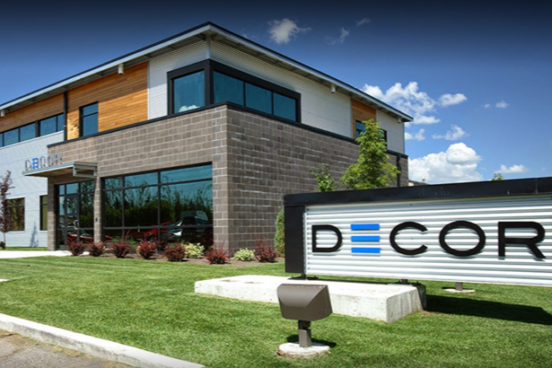
Touring the Decor head office and factory in Morden, Manitoba gave me my first opportunity to follow that next stage of the journey. Much of my education has focused on designing spaces, selecting finishes, creating accurately scaled drawings, and understanding functional layouts. Seeing what happens before cabinetry reaches a client’s home brought that learning to life in an entirely new way.
My first impressions of the head office and factory were how friendly and welcoming everyone was, that it was spotlessly clean and organized, the impressive amount of manufacturing technology being utilized, and the sheer size of the place! Walking through the facility, I quickly realized just how much coordination goes into producing custom cabinetry. Every department played a role, and every production stage is built on the one before it. Watching dozens of cabinets moving through different stages of production at once really put the scale of the operation into perspective.
I was able to see everything from receiving wood products right through to the custom boxing machines used for shipping. I observed every stage of production, from cutting cabinet components and edge banding to hand-staining door fronts, paint finishing, assembly, lighting installation, packaging, and finally shipping. My favourite stop was the special custom orders department. It was exciting to see the unique requests that clients and designers dream up and how the factory works through creative solutions to bring those ideas to life. It reminded me that custom cabinetry isn’t about choosing from a catalogue. It’s about creating spaces that reflect the people who live in them.

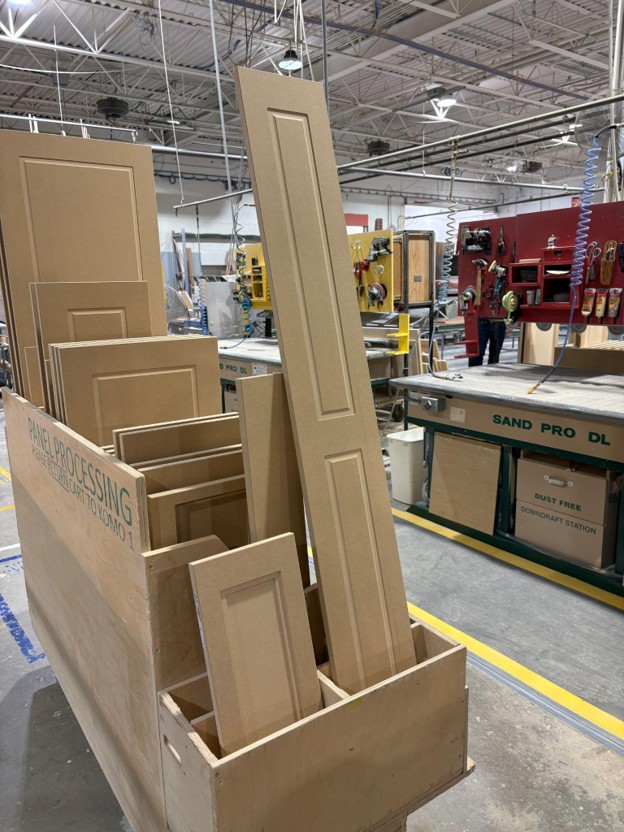
Door fronts for a project sorted and prepped for manual review, sanding and touch-ups
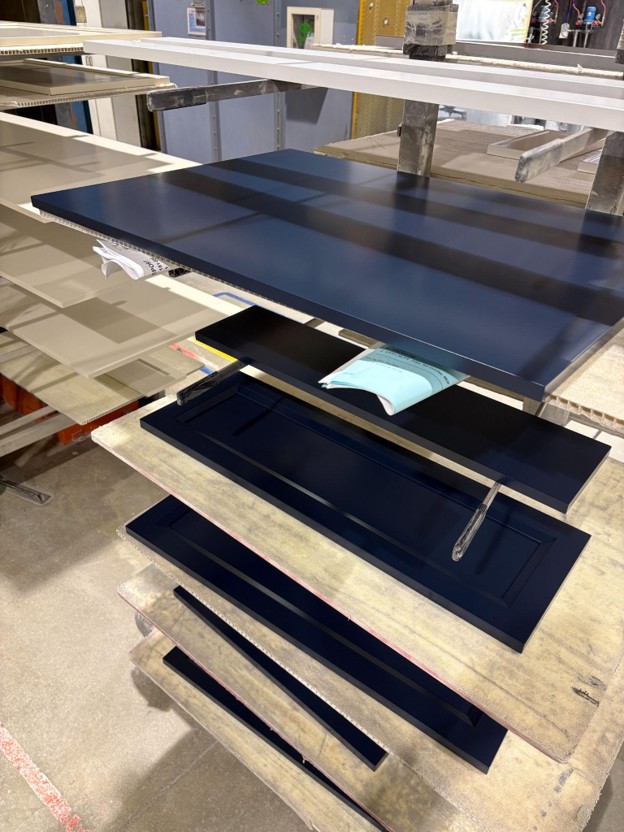
Cabinet components shown painted with a custom paint colour
Edge banding machine with 80 different edge band types
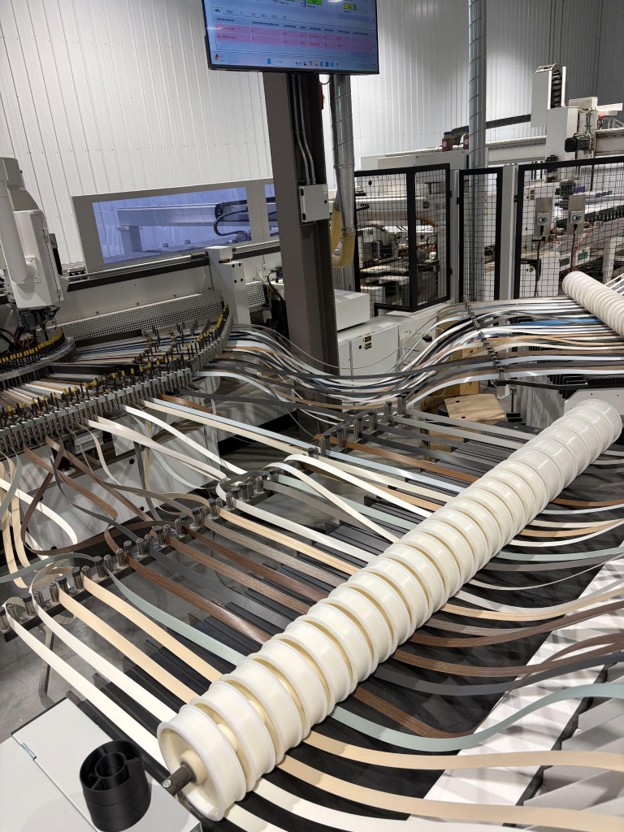
Watching each production stage unfold helped connect many of the concepts we’ve been learning in class, including material selection, durability, sustainability, and finish options. Before visiting the factory, it was easy to think of cabinets simply as finished products in a showroom. Walking through the production floor made me realize how much precision, planning, and technology are involved long before a product reaches a client.
Perhaps what surprised me most was seeing how craftsmanship and advanced technology work together throughout the manufacturing process. While I expected to see skilled people building cabinetry by hand, I was equally impressed by the sophisticated equipment that ensures precision and consistency throughout production, such as CNC machining, paint automation, barcode tracking and robotics.
Three lessons I learned during this visit:
1. Good Design Starts Long Before Installation
Decor does not keep stock products, so every piece is made-to-order. This means that accurate measurements are essential. I have accompanied the Two30Nine designers on-site to collect measurements, and have seen those translated into designs with detailed drawings and renderings, making the most of every inch of available functional space. Accompanying those drawings is an extensive list of specifications, including product line and material selections, finishes, decorative and structural panels, columns, door styles, shelving options, and many other details. Seeing production firsthand reminded me that every dimension we place on a drawing has a real impact. A cabinet isn’t simply adjusted on site – it has already been engineered and manufactured to fit a specific space.
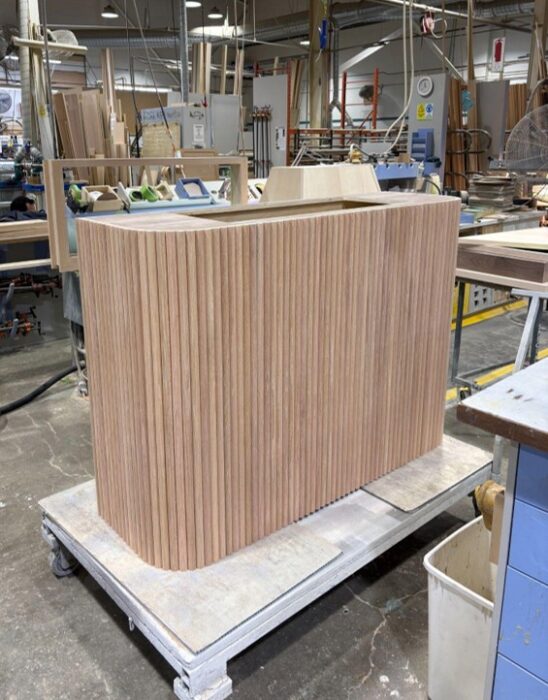
2. Small Details Matter
Before my placement, I never realized just how many decisions go into custom cabinetry. Every project involves countless details from door styles and edge profiles to reveals, shelving, and hardware. Individually they may seem small, but together they shape both the appearance and functionality of the finished space. One example is lighting placement. Planning lighting in the design stage is crucial to help clients better visualize the finished space through renderings, but also allows for the manufacturing process to factory route lighting tracks for a seamless integration of lighting hardware and controls. Seeing those decisions translated directly to the factory floor reinforced how thoughtful planning at the design stage helps ensure a smoother build, installation, and a more polished finished product.
3. Designers and Manufacturers Work Together
Designers don’t work alone. A beautiful space may begin as a vision, but it takes an entire team to bring it to life. Having a manufacturer like Decor with extensive selection options and the ability to create custom solutions gives designers the flexibility to create beautiful, highly personalized designs. The installers are experts at bringing the vision to life, getting everything in place safely, and problem solving for things such as a skewed wall in an older character home. Many others, including Customer Service Representatives and Project Coordinators, play a role too, all relying on and supporting one another for the shared goal of a happy client. Seeing this collaboration firsthand has been really valuable.

I left the tour with a greater appreciation for the craftsmanship and precision behind custom cabinetry, the technology that supports modern manufacturing, the importance of accurate planning and specifications, how my classroom learning connects to the real world, and lastly, the people behind every step of the process.
As I continue my field placement at Two30Nine by Decor, experiences like this remind me why hands-on learning is such an important part of becoming an Interior Decorator. It’s one thing to learn the terminology, design guidelines and specifications to design cabinetry in the classroom, whether on paper or in design software, but it’s another to watch those ideas move through an entire manufacturing process and become something that will eventually be part of someone’s home.