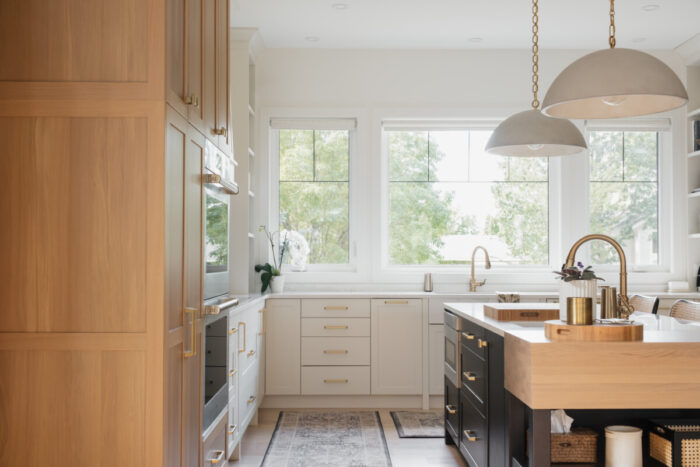
Frameless vs. Framed Cabinets: Everything You Need to Know Before You Choose
If you’ve started researching kitchen cabinets, you’ve probably come across the terms “frameless” and “framed” – and maybe wondered what the difference actually means for your day-to-day life. As a manufacturer and design center specializing in frameless cabinets, we’ve had these conversations with hundreds of homeowners. The honest answer? The right choice comes down to understanding both options clearly. Today we’ll walk through the key questions we hear most often, so you can make a confident, informed decision.
Construction: What’s Actually Different?
The fundamental difference between framed and frameless cabinets
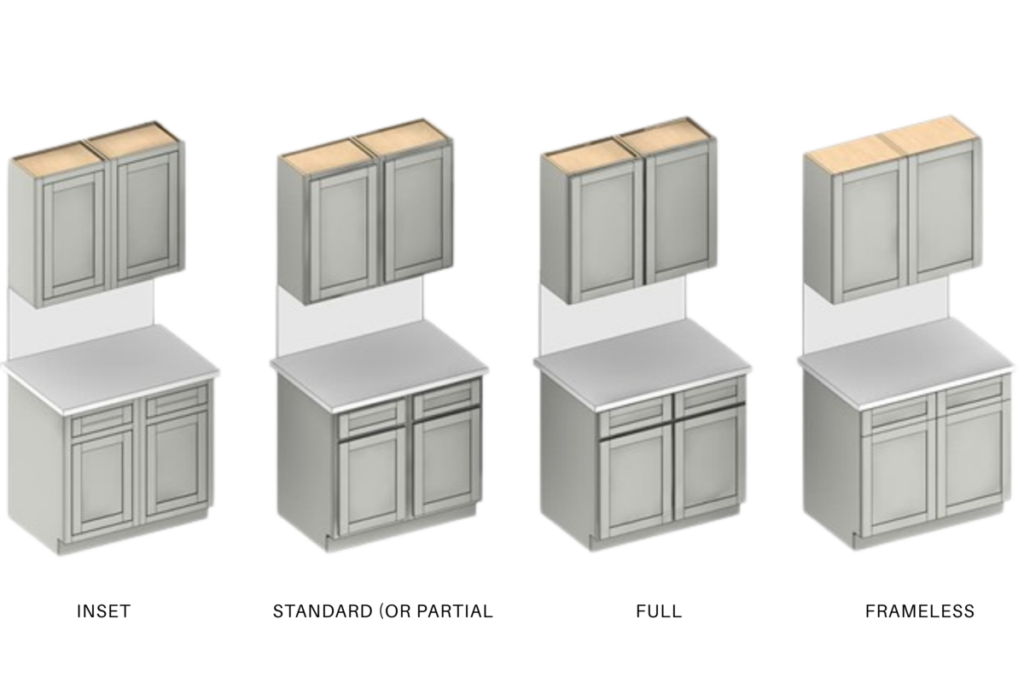
Framed cabinets have a front frame that defines each cabinet box, giving a visible border around doors and drawers. Frameless cabinets eliminate that frame entirely – the door covers the whole cabinet front, creating a cleaner, more uninterrupted look. Framed style construction is dominant in cabinetry from the USA, whereas frameless has traditionally been used more by Canada manufactures.
Even full-overlay framed cabinets will have larger reveals between fronts than their frameless counterparts. More importantly, because of the frame, the interior usable width and height of a framed cabinet is reduced by roughly 20% compared to frameless. That matters more than most people expect – particularly in top drawers, where taller items like potato mashers or boxes of sandwich bags often can’t clear the face frame above.
How each construction type gets its strength
Face frame cabinetry is built with a solid frame at the front of the cabinet box – typically 1.5″ wide by ¾″ thick hardwood – which provides structural strength and a place to attach doors.
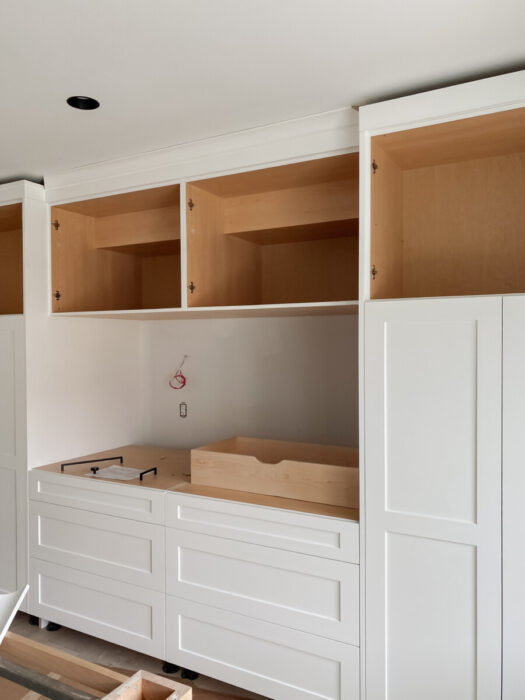
Frameless cabinets get their strength from the cabinet box itself, using thicker box sides and doors attach directly to the cabinet sides via concealed hinges. Because there’s also no center stile (unless the cabinet is oversized in width), you get full, unobstructed access to interior shelving and pull-out trays.
Are framed cabinets actually stronger? (Spoiler: not really)
This is one of the most common myths we encounter. Framed cabinets look sturdy because you can see the frame, however properly built frameless cabinets are equally strong. Both types can meet rigorous performance standards when manufactured correctly. The frame just creates an impression of solidity that doesn’t necessarily reflect structural superiority.
Aesthetics: Which Look Is Right for Your Kitchen?
How your cabinet choice shapes the overall design
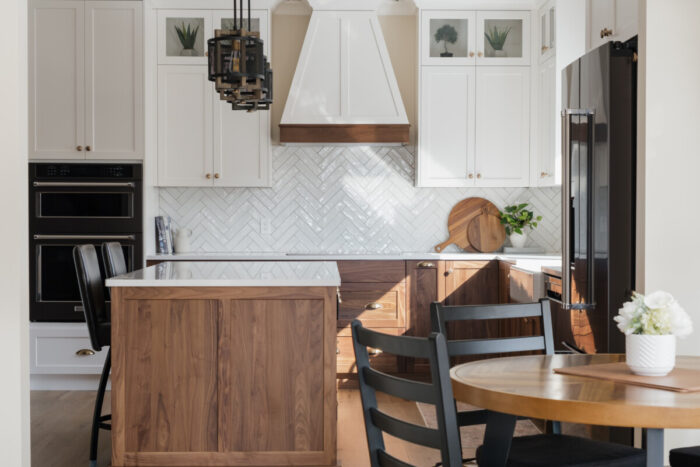
Framed cabinets lend themselves to traditional or highly detailed looks – especially with inset doors and decorative moldings. Frameless cabinets offer a minimalist, modern aesthetic with smooth, uninterrupted surfaces, perfect for more minimal kitchens. That said, frameless can be designed in a traditional or transitional style just as easily, while still delivering the full-access storage people love.
The “architectural” feel of framed vs. the seamless look of frameless
The visible face frame in framed cabinetry adds a furniture-style feel, however it requires a skilled designer to handle finishing details like plywood ends, veneer skins, flush bottoms, and door panels correctly – otherwise the result can appear unfinished. Visible seams between units where frames meet can also catch clients off guard when installation begins, so setting expectations early is important.
Frameless cabinets remove the visual gap between door and drawer fronts, making spaces feel more streamlined and expansive. There are also many ways to incorporate furniture-inspired details into frameless designs, such as decorative columns, end panels, furniture toe kick details, face frames on open cabinets, shelves with matching furniture edge detail, and profiled overlay fillers. The result bridges modern and traditional design beautifully.
Functionality: The Storage Difference You’ll Actually Feel
Does frameless really give you more space?
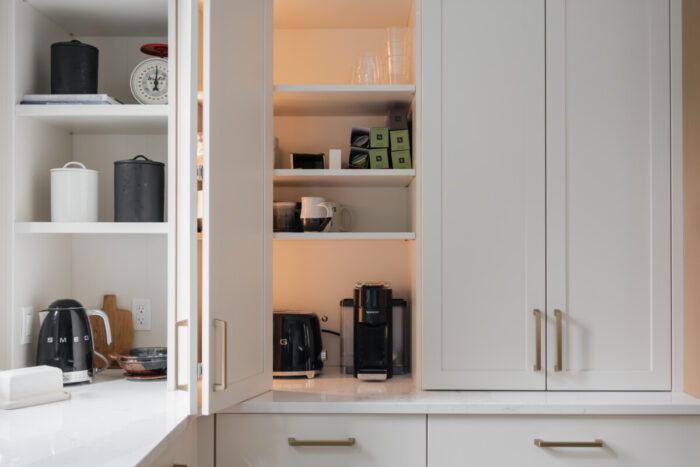
Yes – and it’s meaningful. Frameless cabinets generally provide a few extra inches of usable interior space per cabinet because there’s no perimeter frame or center stile. In smaller kitchens, that extra space makes a real difference for larger cookware, pantry items, or pull-out organizers. The gain that clients respond to most is the extra height in top drawers without a face frame blocking access.
What full access really means in daily use
The absence of a center stile changes how a kitchen actually feels to use. You can see and reach the entire cabinet interior without obstruction. This is especially valuable for deep drawers, wide shelves, and pull-out organizers – making daily prep and cleanup more efficient. Homeowners also have the freedom to reorganize their storage as their needs evolve, without being limited by what will physically fit past a stile.
Installation & Specifying: What Professionals Should Know
Installation requirements for frameless vs. framed
Frameless cabinets need solid, level walls and floors, as there’s less tolerance for uneven surfaces. Precise measurement is critical, and consistent door reveal alignment is more visible. Best practice is to use overlay fillers at any wall or corner to allow for plumb and level installation. For a premium look, applied panels can fully capture the cabinet depth, including the door face, and be custom scribed on site.
Face frame cabinets can be more forgiving; the frame may hide minor installation variances and the large reveals between fronts doesn’t require as precise alignment. However, because cabinet sides are thinner, framed cabinets are screwed to each other through the front face frame itself – which isn’t always the cleanest look when the cabinet is open.
What really tips the scale: framed or frameless?
It depends on the homeowner’s priorities. Budget is a factor – quality frameless cabinets can be slightly more costly than the most traditional-looking partial-overlay framed cabinets, though most full-overlay framed options are very comparably priced to frameless lines. Framed inset cabinets are often the costliest of all, due to the precision required for inset doors and drawer fronts.
Layout matters too – frameless maximizes space in tight kitchens. Durability isn’t a deciding factor if both are produced in a high-quality manner. Once price, space, and durability are accounted for, aesthetic preference typically becomes the deciding factor.
The one thing more people should understand about cabinetry
Not all cabinets are created equal – and aesthetics alone doesn’t guarantee longevity. Before you choose a manufacturer, regardless of whether framed or frameless, understand the construction quality & warranty behind what you’re buying is key so you know your kitchen will not only look beautiful but function well for decades to come.