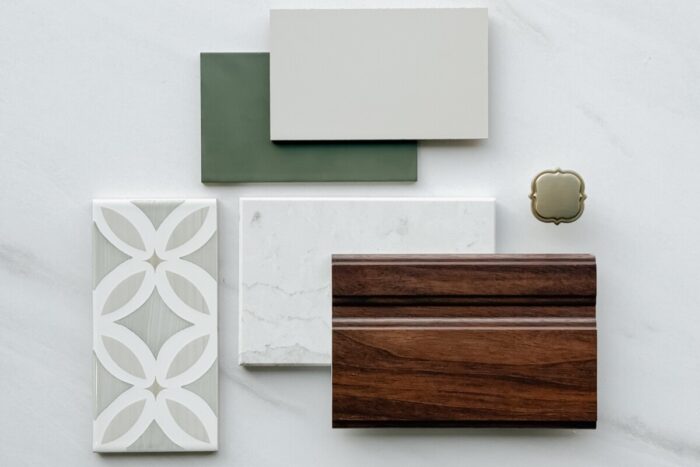
How a Mood Board Brings Your Kitchen Design Together
T’was the night before Christmas, a day filled with glee,
Where a task to be written was bestowed upon me.
With an interesting topic on kitchens for ye,
I ask a joyful image from Chat GP(Te).
End.
It’s almost that special time of year, where the lights are dimly glowing, snow is gently floating, and the comforting aroma of hot cocoa fills your kitchen as your parents gently stir it over the stove. But what transforms your kitchen into a true winter wonderland and how can we achieve that feeling of joy?
When designing a kitchen, or any interior space, it can be very difficult to imagine just how your space and everything will come together. With today’s technology, we have many tools available to help us envision these spaces. However, one of the most useful tools we can use in the design process is a material board.
Using a mood board is a great way to understand how each material interacts with one another. It helps us visualize the space right in front of us, as well as it allows us to feel the different textures, whether it be something smooth, soft or grainy. It helps us make our final decisions in the design process, making each selection more personal or intentional.
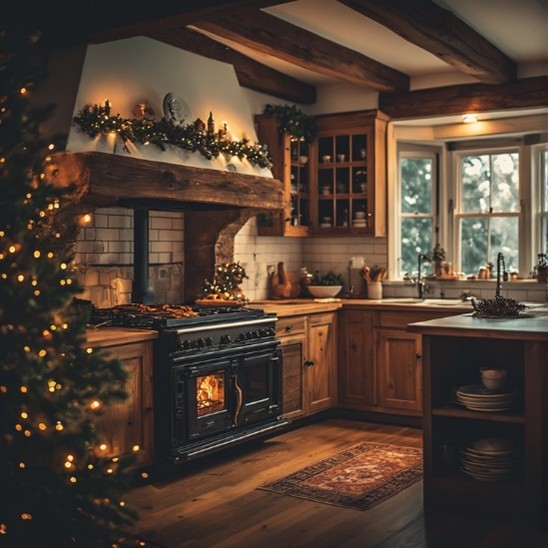
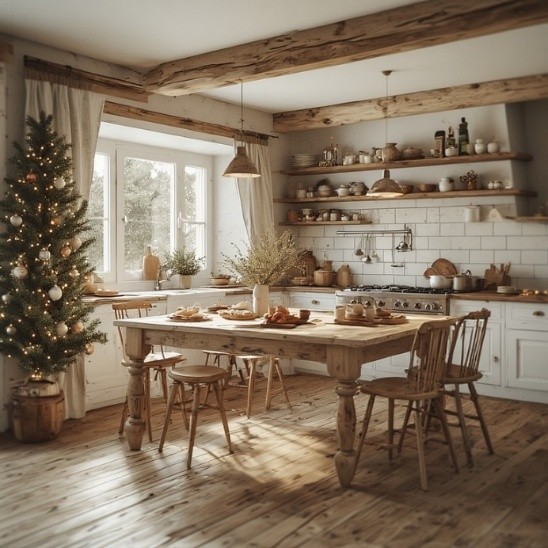
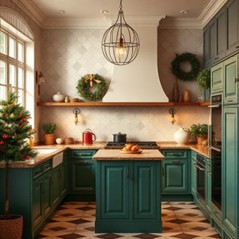
Designing a mood board can be very overwhelming at times, especially when trying to mix and match a collage of pictures and colours that you pulled from a Pinterest board. While these collections can be great for inspiration, they can also feel scattered. Creating a mood board helps narrow down these specific details and elements, making it easier to evaluate what truly works together as well as it refines final selections. As an example, here are a few inspiring images generated using ChatGPT. The prompt used was: “Create a kitchen that’s warm and welcoming, with colour to represent the Christmas season.” While the results varied, and the designs may not be the most functional, they do highlight several interesting elements that serve as great sources of inspiration.

Pros and Cons:
The first two images feature beautiful warm wooden tones throughout, giving the spaces a more rustic feel. This warmth helps create a traditional and welcoming atmosphere something often associated with Christmas gatherings. However, while the use of wood is appealing, these designs may rely on it a bit too heavily.
The following image introduces some more colour and decorative features into the space. The use of decorative doors and backsplash help make the space feel more traditional and festive.
After narrowing the elements we like from each image, we can now take those elements and place them onto a material board:
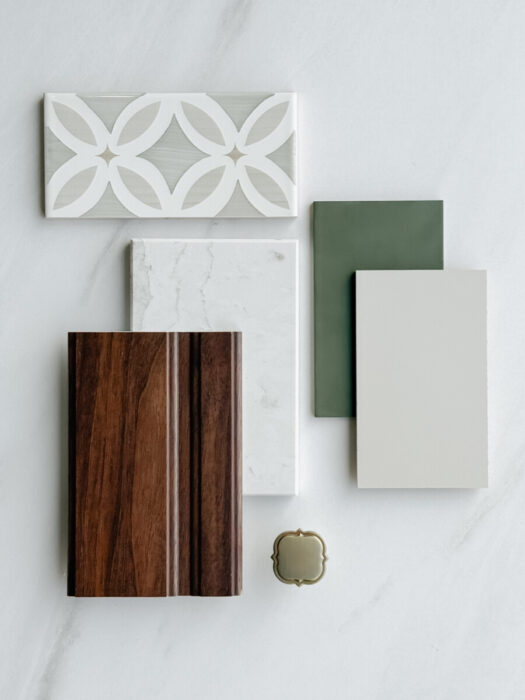
By using a material board, the design process becomes a lot less overwhelming and far more intentional. Rather than guessing how colours, textures and finishes interact with one another, we’re instead able to see and feel how each element contributes to the overall space and atmosphere for your design. This approach helps transform inspiration into a thoughtful, cohesive design that truly captures, in this case, the warmth and joy of the season.
Ginette Dupas
Ginette joined the Two30nine team in October 2024 after earning her bachelor’s degree in Environmental Design with a focus on Interior Design, from the University of Manitoba. She has a strong passion for interior design and enjoys creating thoughtful, functional spaces that reflect both creativity and her clients’ needs.