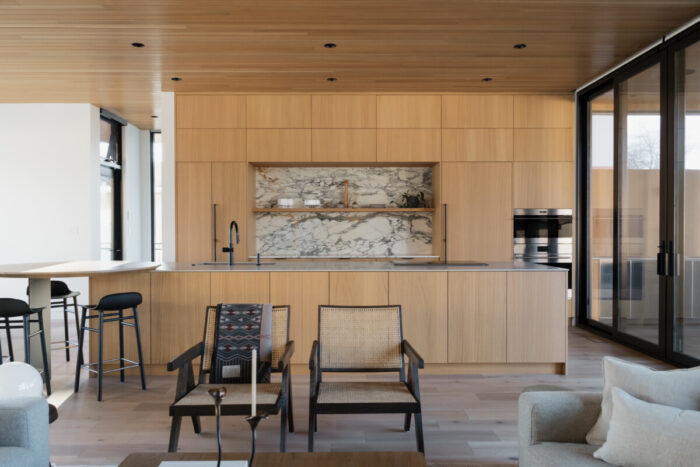
The Timeless Appeal of All Wood Kitchens
All-wood kitchens are making a major comeback and for good reason. Natural materials bring warmth, texture, and character into a space in a way painted finishes simply can’t replicate. One of the most common questions we’ve been getting lately is: “How do I mix and match woods in my kitchen without it clashing or feeling too matchy-matchy?”
The good news is your cabinets and flooring do not need to match. In fact, it’s often better if they don’t. The key is creating balance through tone, contrast, and texture. Trying to match woods exactly can sometimes create a flat one-dimensional look.
Wood Undertones
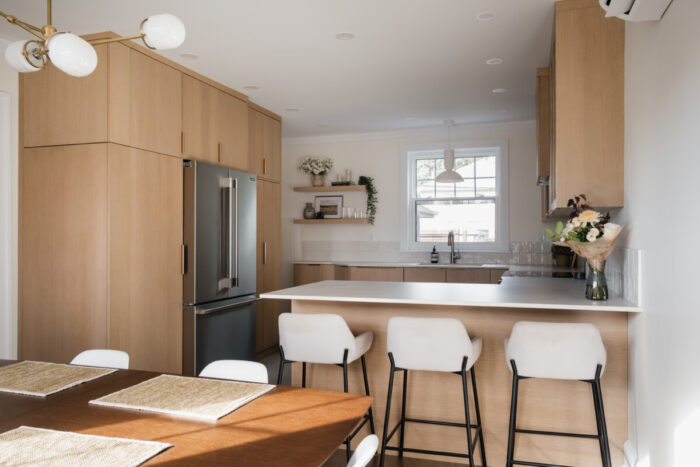
When selecting wood finishes, pay attention to the undertones in the stain. Woods generally fall into warm or cool categories and keeping them within a similar undertone family helps create a more cohesive look.
For example, warm oak cabinetry tends to pair well with flooring that has honey, caramel, or walnut undertones, while cooler woods with grey or ash tones work best alongside similarly cool finishes. The woods don’t need to be identical they just need to feel related.
A good rule of thumb is to limit yourself to two or three woods within one space. This keeps the kitchen feeling layered and intentional without becoming visually overwhelming.
Contrast
Contrast is what gives an all-wood kitchen depth and interest. You might choose darker flooring with medium or lighter cabinetry, or vice versa.
Look closely at the details already present in your materials. If your flooring has darker knots or grain variation, consider pulling those deeper tones into your cabinetry or island stain. Repeating tones throughout the space helps create contrast while still maintaining a cohesive overall design.
This balance keeps the room from feeling either too blended together or too disconnected.
Grain Pattern
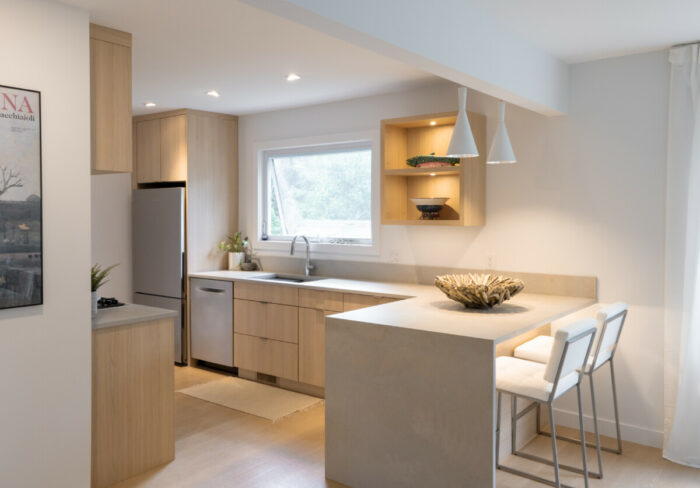
Another important factor to consider is grain pattern. If your flooring has a busy or highly varied grain, you may want to choose a simpler grain pattern for the cabinet fronts.
Too many competing patterns can make a kitchen feel visually crowded, as every surface is fighting for attention. Mixing textures is great but balance is key.
The goal in an all-wood kitchen isn’t perfect uniformity. Rather than trying to make every finish match exactly, focus on creating a space that feels balanced, natural, and thoughtfully layered.
When done well, mixing wood tones adds richness and character, creating a kitchen that feels timeless, warm, and lived-in.