Planning for Your Dream Kitchen Starts Here
One of the biggest mistakes we see homeowners make when starting a kitchen project is beginning with finishes. Colours, door styles, inspiration photos… all the fun parts. And we get it. That is the fun part. But if that’s where the process starts and ends, it often leads to a kitchen that looks beautiful, but doesn’t actually work the way it should.
A successful kitchen begins with function. Before anything else, it needs to support how you cook, gather, store, and move through your space every single day. When that foundation is in place, everything else falls into place more naturally. It also protects your budget. Thoughtful planning early on helps avoid costly changes later and makes the entire process feel far less overwhelming. At the end of the day, the goal isn’t just a beautiful kitchen. It’s one that works just as well five, ten, or twenty-five years from now.
Start with how you live

Before we talk about layouts or finishes with a new client, we start with questions.
- Do you entertain often?
- How many people cook at the same time?
- Are you planning to stay in your home long-term?
The most successful kitchens are deeply personal, and these conversations help us understand what the space actually needs to do. A great place to start on your own is by thinking about what isn’t working in your current kitchen.
- Is there never enough counter space?
- Is storage hard to access?
- Does the layout feel cramped?
Those frustrations are often where the best design solutions begin.
Thinking in workflow, not just layout
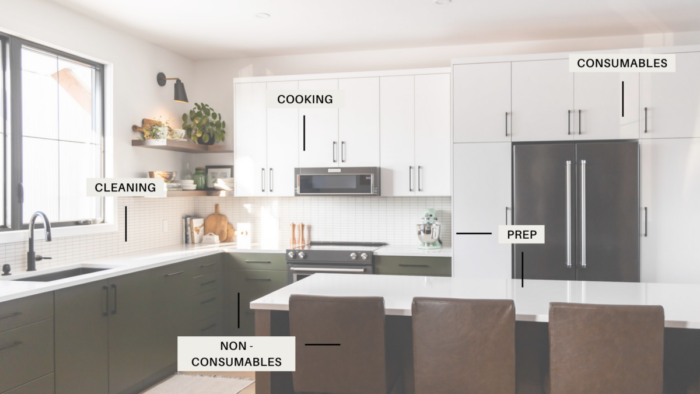
One of the most helpful ways to approach a kitchen design is to think in zones rather than just a single layout.
Most kitchens naturally fall into a few key areas:
- Prep
- Cooking
- Cleaning
- Non-Consumables
- Consumables
When these areas are thoughtfully arranged, the kitchen starts to feel effortless to use. You’re not constantly crossing the room or working against the space. Instead, everything flows the way you actually live.
This kind of planning is what turns a good kitchen into a great one, read this blog for a more in-depth look at kitchen zones.
Why appliances come first
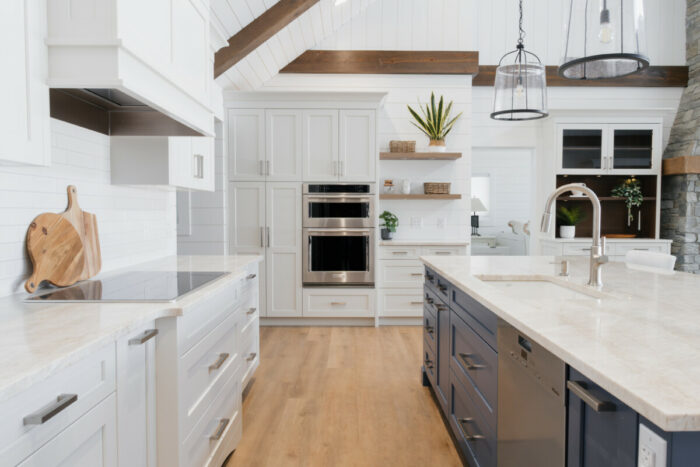
This is the part that tends to surprise people. Appliances should be selected before cabinetry is finalized, and ideally before the layout is even designed. They influence more than you might expect. Appliance choices impact cabinet sizing, electrical and plumbing requirements, ventilation, and overall flow. Appliances today also aren’t as “standard” as they once were. Leaving a generic opening and hoping something fits later can limit your options or lead to costly redesigns.
Planning early keeps everything working together seamlessly.
A quick look at refrigeration options
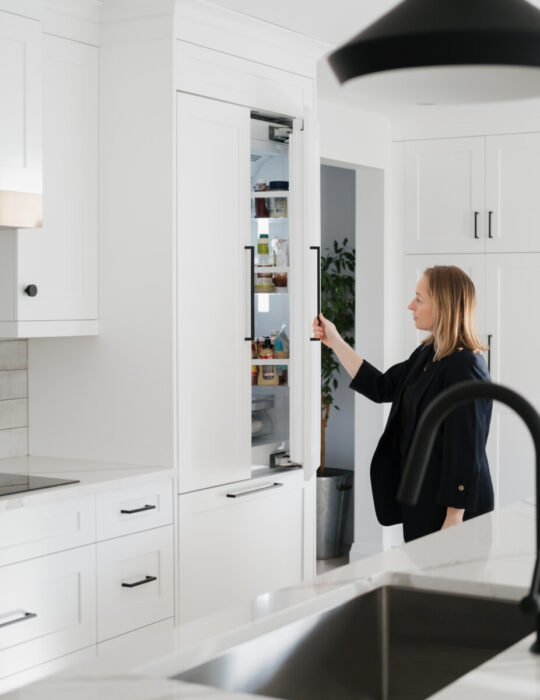
Refrigerators are a great example of how one decision can shape the entire design.
A freestanding refrigerator is often the most budget-friendly option, but it will sit slightly proud of your cabinetry.
Counter-depth models create a cleaner line, though the doors and handles will still extend forward enough to open properly.
Built-in refrigerators sit fully flush with your cabinetry for a seamless, integrated look. They’re beautiful, but they do come with a higher investment, both for the appliance and the cabinetry required to house it. From there, you can decide whether you want your appliances to blend in or stand out.
Panel-ready appliances disappear into your cabinetry for a furniture-like feel. On the other hand, finishes like stainless steel or newer options like KitchenAid’s Juniper create contrast and can become a focal point in the space.
Cooking Setup matters more than you think
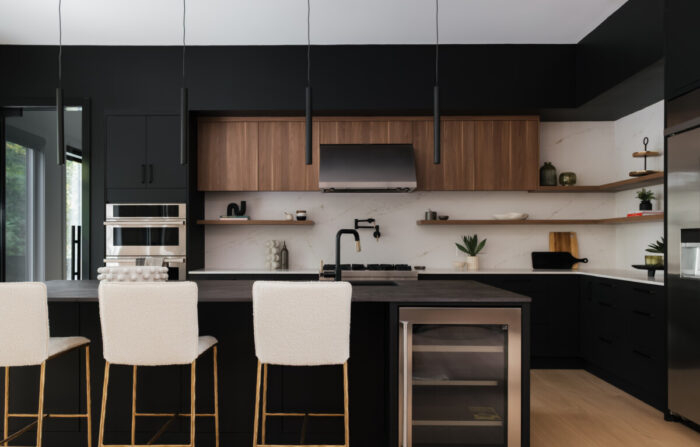
When planning your cooking space, one of the first decisions is whether to go with a traditional range or a separate cooktop and wall oven. Ranges are familiar, efficient, and straightforward. They’re available in a variety of sizes and fuel types, making them versatile for many kitchens. A cooktop paired with a wall oven offers more flexibility. You can place the oven at a comfortable height and tailor your layout more precisely. It’s a great option, but it does come at a higher cost since you’re working with multiple appliances and additional cabinetry.
Let’s talk about ventilation
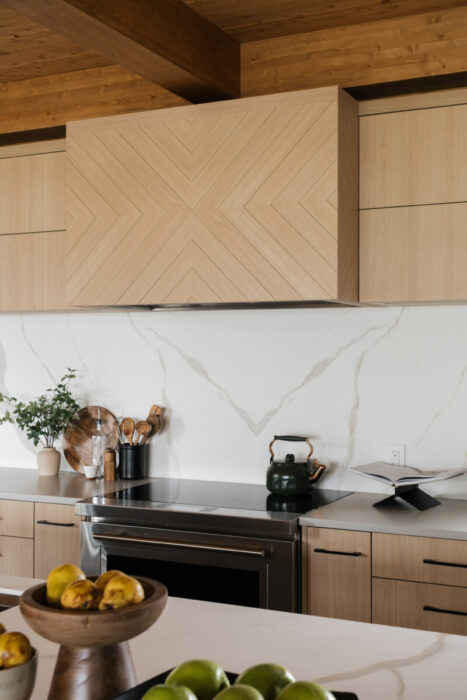
In our Manitoba climate, ventilation matters more than most people expect. With long winters and tightly sealed homes, proper exterior ventilation helps protect your cabinetry from grease and moisture buildup. It also plays a key role in safety, especially with gas appliances. The good news is there are plenty of ways to make it work beautifully within your design.
Decorative metal hoods can become a statement feature. Custom millwork with hidden inserts keeps things seamless while still adding character. And for a more minimal look, downdraft systems are a great option, especially for island cooktops where you want to keep sight lines open.
The details that make a big difference
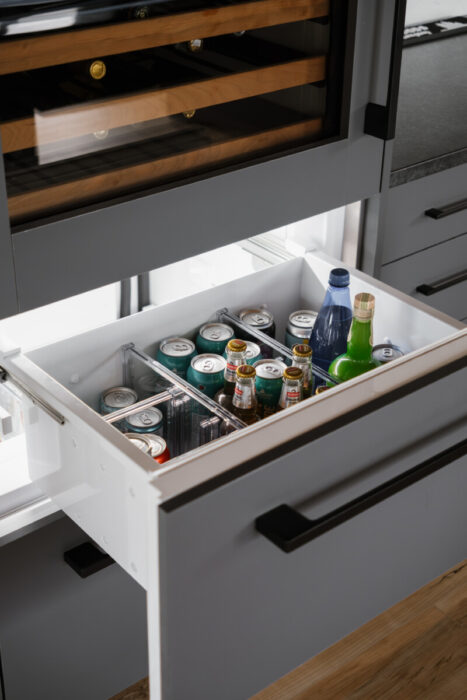
Beyond the main appliances, there are smaller decisions that can have a big impact on how your kitchen functions. Built-in or drawer microwaves create a more seamless look. Panel-ready dishwashers keep cabinetry lines clean and uninterrupted. Beverage fridges and ice makers are great for entertaining, but they require early planning for water, power, and ventilation. Even small appliances like coffee makers or stand mixers can shape how your kitchen is organized.
When these details are considered early, the result is a space that feels effortless to use.
Storage that actually works
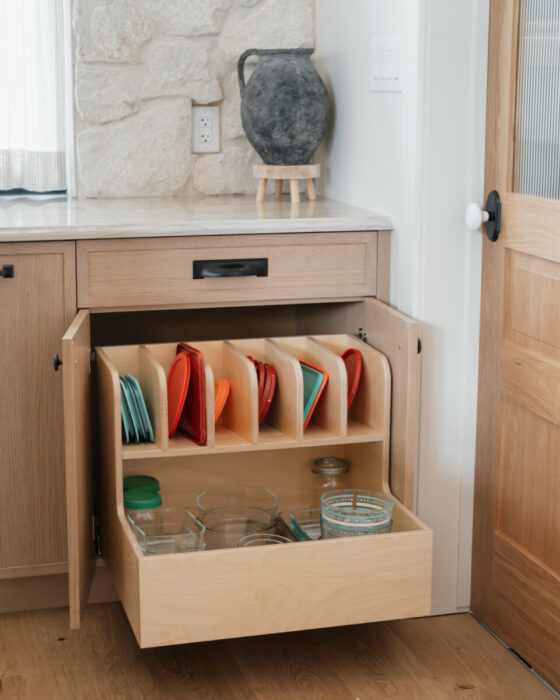
Storage isn’t just about having more of it. It’s about having the right kind of storage. Deep drawers often outperform traditional lower cabinets because they make everything easier to see and access. Pull-outs, organizers, and dedicated zones can completely change how a kitchen functions day to day.
Pantry design is another big one. Whether it’s a walk-in pantry or a tall cabinet system, the goal is the same: making everyday items easy to access without cluttering your main workspace.
And then there’s hidden storage. Appliance garages, integrated pull-outs, and clever cabinetry solutions help keep countertops clean while still keeping everything close at hand. Good storage doesn’t just store things. It supports how you live.
Lighting that brings it all together
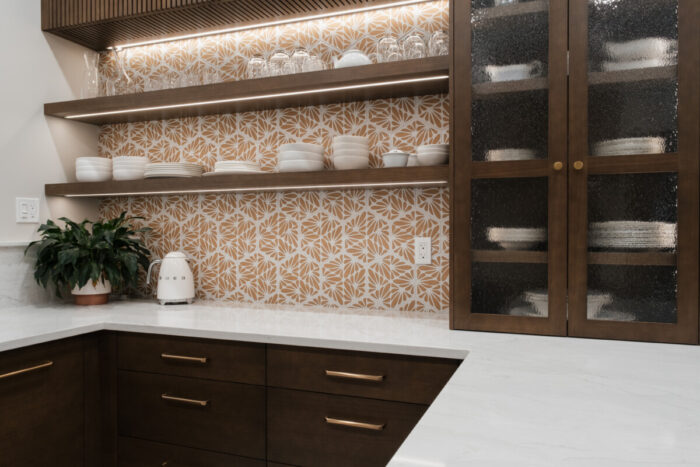
Lighting is one of the most underrated parts of a kitchen design, but it has a huge impact on both function and atmosphere. A well-designed kitchen uses layered lighting:
- Ambient lighting sets the overall tone of the space.
- Task lighting, like under-cabinet fixtures, supports prep and cooking areas.
- Accent lighting highlights architectural details, shelving, or key design features.
When lighting is planned properly, the kitchen doesn’t just look better. It works better at every time of day.
A thoughtful kitchen is never an accident
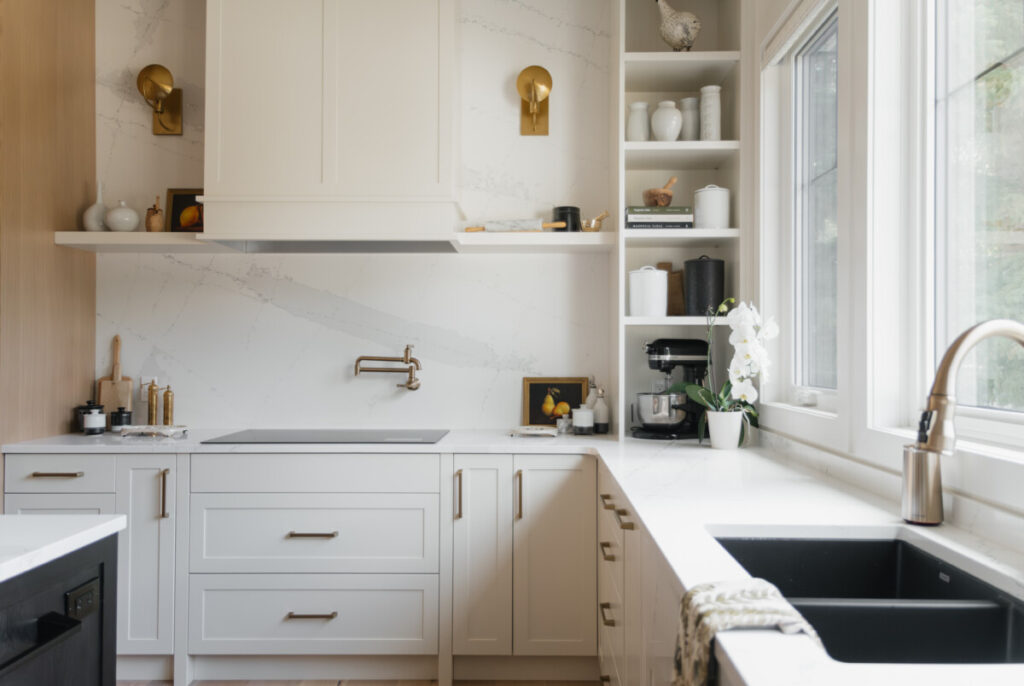
The best kitchens don’t happen by chance. They come from thoughtful planning, honest conversations, and a clear understanding of how the space needs to function. When you take the time to get that foundation right, the end result isn’t just something that looks good. It’s a kitchen that feels right, every single day.